We say it all the time, but it bears repeating: one of the last things we should be doing with generational conversations is using them to draw divides, enforce stereotypes, and judge each other. Yet, isn’t that what keeps happening—both in the larger cultural conversations and in our workplaces?
Let’s make this very clear: Your generation does not define you. Now, we know that this may sound rich, coming from the company called “Generational Performance Solutions,” and from the team who polls the audience to ask their generation at most events. But hear us out before you grab the pitchforks… we do think generational insights are important and impactful—it just can’t be the only way you’re trying to understand your team.
Adding Nuance to the Multigenerational Discussion
While there’s quite an uphill battle to undo the generational stereotyping (across all generations—not just Gen Z and Millennials!), so much of our own data shows us that the members of each generation are nuanced. To misquote Walt Whitman, generations contain multitudes. We’ve come across many Gen Zers who hate technology, and we’ve also seen our fair share of Boomers going viral on TikTok (watch out… they’re getting those TikTok dances down to a science). Sometimes, the stereotypes don’t ring true because each person comes with unique skills and viewpoints that simply do not track with typical generalizations.
On a more personal note, we often meet audience members who share their generation but give a caveat: “I’m Gen X, but I feel like more of a Millennial,” or, “I’m on the cusp, so I lean Boomer.” We’ve already discussed microgenerations here, but it’s important to mention how often people don’t resonate with the labels placed on their generations. Sometimes it’s because those labels are flat-out wrong, and other times, it’s because that person can’t be summed up by one moniker. And this is where we give our own work a major caveat: if you’re using generational data to understand your team with no other tools or frameworks, then you’re probably going to have quite a few blind spots.
Understanding Your People as Individuals
One of the ways that we’ve found our own research works best is when layered with a behavioral / leadership assessment. Here are a few that our team really enjoys:
-
- Myers-Briggs: This one’s a classic for a reason. It measures you in 4 main categories (Introversion/Extroversion, Intuition/Sensing, Thinking/Feeling, and Judging/Perceiving) to understand your tendencies related to social energy, decision-making, communication, and planning.
- The Five Voices: Is this one of the best workplace-specific personality tests? We think so. We love the way that the five different voices help teams to understand their inclinations when making decisions together, and speaking from our experience at GPS, it helps us to lean into disagreements when we see each other’s core motives. We’ve got a diverse group of voices on our team, and at this point we reference our voices on a weekly basis when working through roadblocks or opportunities that come our way—and as a bonus, we’ve also found this one to be beneficial beyond the workplace, as well.
- The DiSC Assessment: This one is specifically meant to boost workplace communication, which is always something we can get behind. The four main work styles (Dominance, Influence, Steadiness, and Conscientiousness) are aimed at strengthening workplace skills and building confidence in leaders. It also uncovers your motivators, your stressors, and your priorities, which is especially important when layered with generational data, as those are often impacted by your stage of life and your generational experiences.
- Gallup’s CliftonStrengths Team Grid: If you’re someone who loves a good visual, this one is for you. Not only does it track the individual strengths of each team member, but it lays them out in a grid so that you can clearly track the collaborative success of your entire team. The idea of “individual assessments in service to group progress” is baked into the entire model, which is perfect for an organization looking to increase collaboration, reduce friction, and measure their collective wins.
Individual Tendencies + a Generational Lens
Whichever you choose, we highly recommend blending a more individual assessment with generational data. You may find that you have two Pioneers (one of the Five Voices), but the way that their voices are shared is different due to the fact that one is a Boomer Pioneer, and the other is Gen Z. Or, you may have lots of Introverts on your team, but their communication habits are impacted differently due to their relationships to technology.
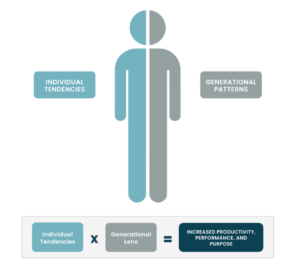
When it comes to starting important, insightful conversations with your team, the goal should always be to make them feel like humans (because that’s what they are, of course). If generational data is used in an overly generalized manner, it can do the opposite.
One last note: behind every “assessment rollout” that actually works is a trained facilitator who knows how to turn data into action – team norms, expectations, feedback, and true behavior change. Generational data adds the most value when it’s used as context (not a stereotype) and layered with the tools you already use.
That’s why we’re launching our GPS Generational Leadership Certification this summer: a program that trains internal leaders and external facilitators to deliver the GPS curriculum and scale it across the organization (training + facilitation practice + annual content). This one’s for the leaders who want to become experts. 👉 Join the interest list for Cohort #1 this summer.
Did you like this week’s post? Then you might like these posts below.
The 2026 Workforce Trends Playbook
Yes, Mass Layoffs Are Impacting Your Team
What’s Next?
If your team is navigating generational friction, stalled performance, or culture misalignment—it’s time to take action.
At GPS, we’re on a mission to help organizations unlock clarity, communication, and performance across every generation. And we don’t just talk about results—we deliver them in 90 days or less.
Let’s bring out the best in your people.
Connect with us today and start driving results that last.