When I started what would eventually become Generational Performance Solutions, I had absolutely no plans to build a company.
I thought I was starting a blog.
I was in my early twenties, trying to better understand the experiences young professionals were having at work. I started interviewing people, asking questions and sharing what I was learning. At the time, I thought maybe the blog would grow. Maybe it would become a big blog someday.
That was about as far as the vision went.
About two years in, though, I remember realizing I had a decision to make: either I was going to figure out how to make this my real job, or I needed to move on.
I chose the first one.
And that decision started a journey I could have never mapped out at the beginning.
From a blog to a business
YoPro Know grew from interviews with young professionals and content into speaking, training, research and consulting.
Eventually, I left my full-time job to give the business everything I had.
And somewhere along the way, the questions we were being asked started changing.
By 2023, we realized something pretty significant: by focusing so heavily on young professionals, we were leaving a large portion of the workforce out of the conversation.
Organizations weren’t struggling with one generation. They were trying to figure out how multiple generations worked together—how they communicated, what they expected from one another, how managers led them, how knowledge moved between them, and how all of those dynamics affected performance.
Our work needed to evolve with the problem we were solving.
That ultimately led YoPro Know to rebrand and become Generational Performance Solutions.
The new name gave us room to grow into what the business had already started becoming.
And grow we did!
Our work expanded into research, keynotes, workshops, advisory work, licensing and certification. We worked with organizations I never could have imagined working with when I was conducting those first interviews. I wrote a book and built proprietary data and tools. Our work reached leaders across the country and eventually around the world.
But perhaps more importantly, GPS became much bigger than me.
There are a lot of fingerprints on GPS
One of the strangest things about being called a founder is that it can make building a company sound like an individual accomplishment. GPS has never been one.
We have had incredible team members and contractors who have cared deeply about this work and helped shape what GPS became.
And as a small business, our vendor partners have truly been extensions of our team. Web designers, graphic designers, CFOs, external consultants, attorneys, accountants, partners who answered questions, solved problems and helped us build things we didn’t know how to build ourselves.
Then there are the clients.
The organizations that took a chance on us when we were small. The clients who brought us back again and again. The people who introduced us to someone else. The leaders who shared what they were seeing inside their organizations and trusted us to help solve it.
GPS exists because a lot of people decided to believe in what we were building.
That makes this next part emotional.
Knowing when growth needs to look different
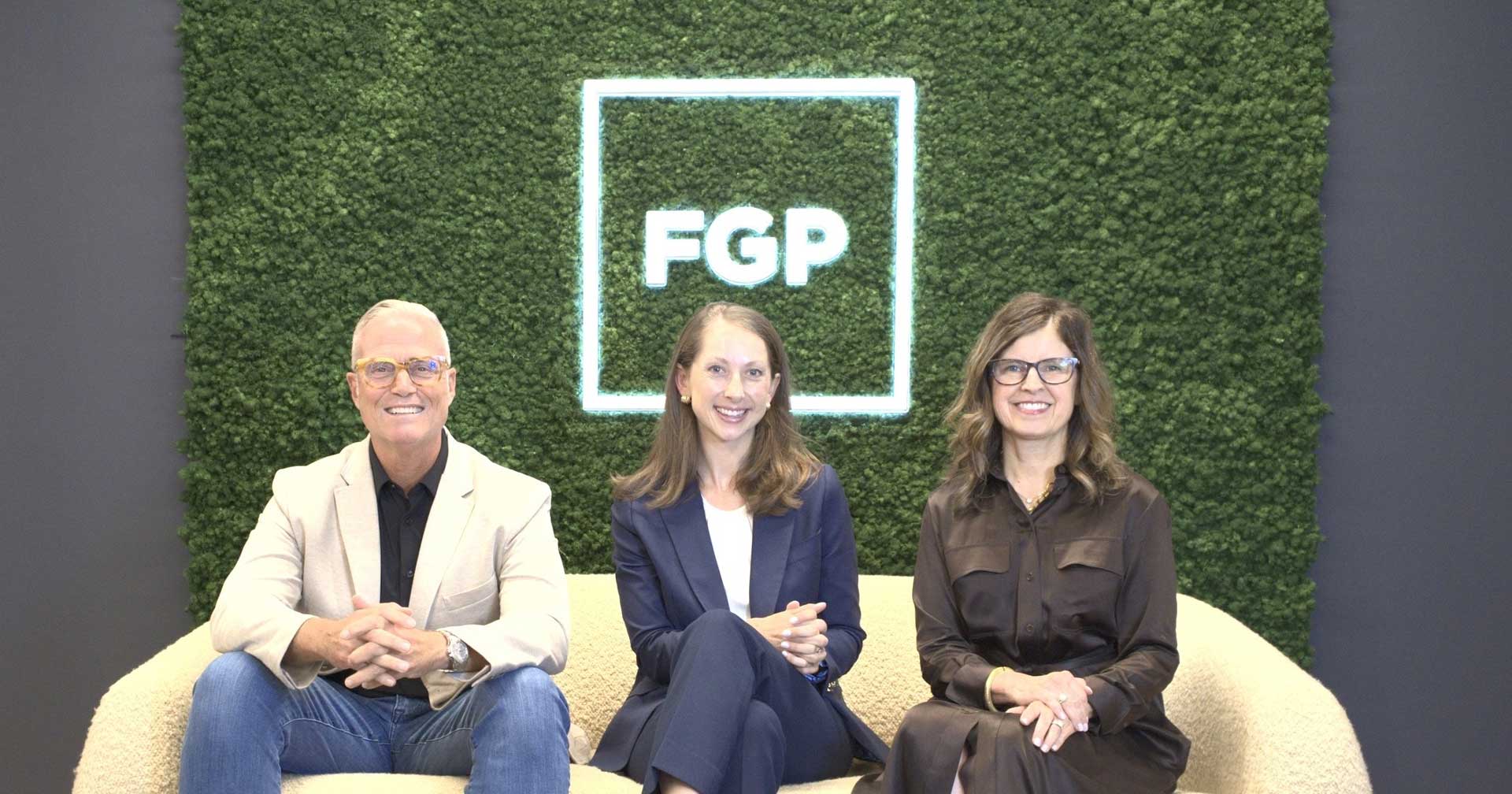
Today, GPS is beginning another chapter: Generational Performance Solutions has been acquired by Find Great People (FGP).
This wasn’t a decision I made overnight. I’ve known FGP and its leaders for a long time, and I’ve always felt connected to the organization and its people. We’ve been having versions of this conversation for quite some time.
And for a while, the timing wasn’t right. If I’m being completely candid, I wasn’t ready.
I loved—and still love—being an entrepreneur. There is an identity that comes with building and running a small business that I am sad to lose in some ways.
But something started changing for me. I spend a lot of my professional life talking about generations, but also about life stages—how what we want, need and value changes as we move through our careers and our lives.
I’ve realized that’s true for me, too. I’m in my early thirties and the more I’ve thought about the next decade of my career, the more I’ve realized just how much I still have to learn (and beyond the next decade too!).
That became really exciting to me. I wanted to learn new skill sets and craved infrastructure around the work we’ve built. I wanted to work alongside really smart people with expertise different from mine and have the opportunity to learn from them in one ecosystem.
And… I wanted to know what GPS could become if its growth wasn’t limited to what we could build as a small, independent company.
Eventually, those things started to outweigh my attachment to doing it all on my own.
Why FGP
For me, this decision came down to two things: growth and scale.
My own growth, and GPS’s.
Joining FGP gives GPS access to infrastructure, expertise and a broader team (who’s pretty awesome, by the way) that allows us to take the research, tools, content and solutions we’ve spent years building and bring them to more organizations and leaders across the country.
It also changes what we’re able to do for the clients we already serve.
A workforce challenge rarely exists in a neat little box labeled “generations.”
It can touch leadership development, organizational effectiveness, compensation, career development, HR strategy, recruiting and so much more.
GPS has always tried to help clients get to the real problem underneath the generational conversation. Now, we’re part of an organization with the expertise to help solve more of those problems, and GPS remains part of that work.
Within FGP Consulting, Generational Workforce Solutions core offering will build on the research, content and services GPS has developed and take them into this next stage.
Five years from now, I hope GPS has grown into a significant part of FGP Consulting and that we’re helping more organizations navigate their changing workforce than GPS ever could have reached on its own.
That’s the opportunity I see.
There’s a lot of story left
I’ve felt just about every emotion throughout this process.
I’m proud, excited, grateful, and I’m increasingly comfortable with the idea that I can miss running the small shop while also being ready for what comes next. Those two things don’t have to compete.
The entrepreneurial part of me isn’t disappearing, either. I still get to build. I still get to experiment. I still get to ask questions about the workforce, turn research into something useful, stand in rooms with leaders and challenge how they think, and create things that didn’t exist before.
I just get to do it differently now.
When I was in my early twenties, growth meant deciding to take a blog seriously enough to see if it could become a business.
Later, growth meant leaving a full-time job, building a team, expanding our work and eventually letting go of a name that no longer represented where we were headed.
Today, growth looks different again. It means recognizing how much more I have to learn. It means putting GPS in a position to become bigger than what I could build alone.
And it means being willing to change something I love because I believe there’s even more ahead.
There is so much left to the GPS story. I’m really excited to see what we write next.
Kamber Parker Bowden
Executive Consultant & Founder,
Generational Performance Solutions
An FGP Company